
Read emails and extract information
Identify requests and turn their content into fields such as customer, product, date or amount. Incomplete details are flagged for review.
Does your team answer the same questions or copy data from emails? We build agents that consult your knowledge, extract information and act in your systems, with clear rules and review where needed.
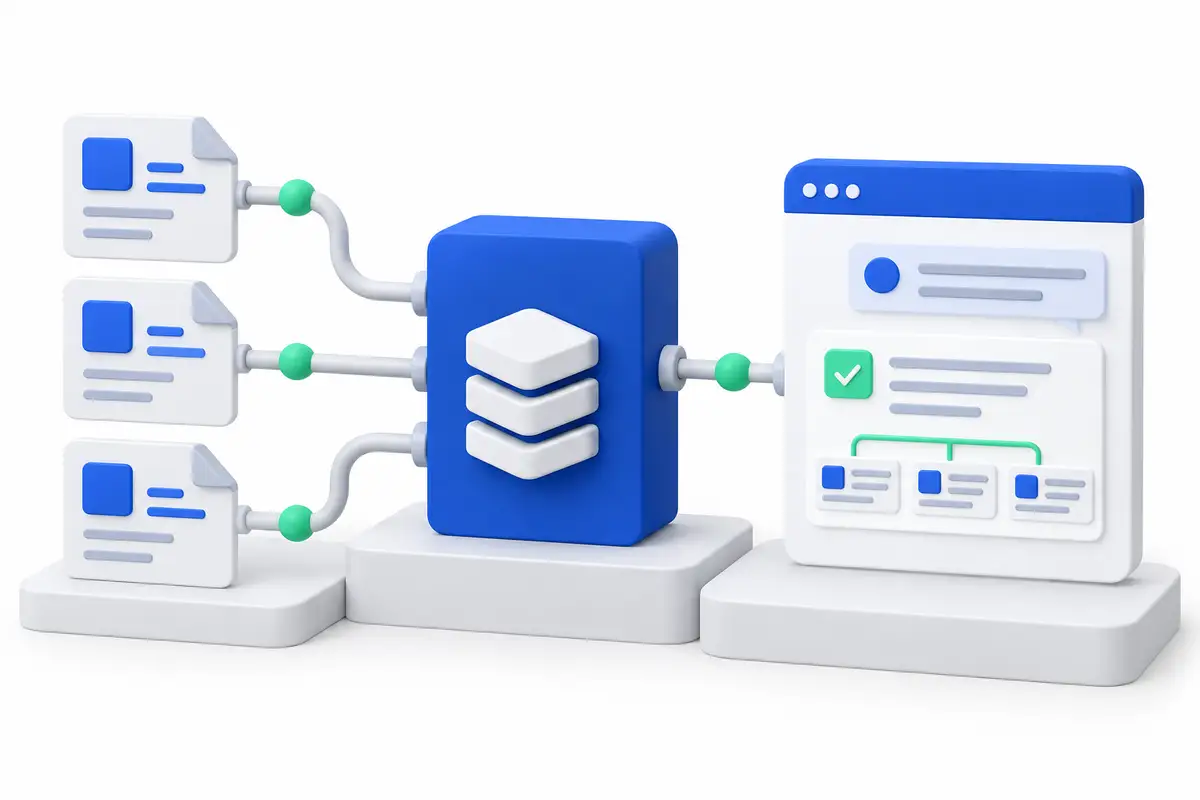
We choose a specific process and define what the agent handles and when your team steps in.
Prices, policies and FAQs are spread across people. The assistant searches your sources to prepare an answer.
Orders or requests need to be read and copied. The agent extracts fields, checks what is missing and prepares the record.
An answer requires an order, customer record or ticket. We connect those lookups to the authorised systems.
When a request needs human judgement, the handoff includes the conversation and collected details so your team can continue.
Identify requests and turn their content into fields such as customer, product, date or amount. Incomplete details are flagged for review.
Find an order or create a request through an API, the connection between applications, using agreed permissions and checks.
See integrationsSearch documents, catalogues or FAQs before answering from that information. This retrieval of sources is known as RAG.
Capture the need and details a person chooses to share, prepare a record and connect it to the agreed sales follow-up.
Build a spoken conversation connected to business knowledge. For Tremus, we developed this assistance alongside its ecommerce website and app.
Tests using cases from your process, error and usage logs, and rules for handing off when information or authorisation is missing.
Explore Tremus’s ecommerce website, app and assistant, alongside our internal document retrieval demonstration.
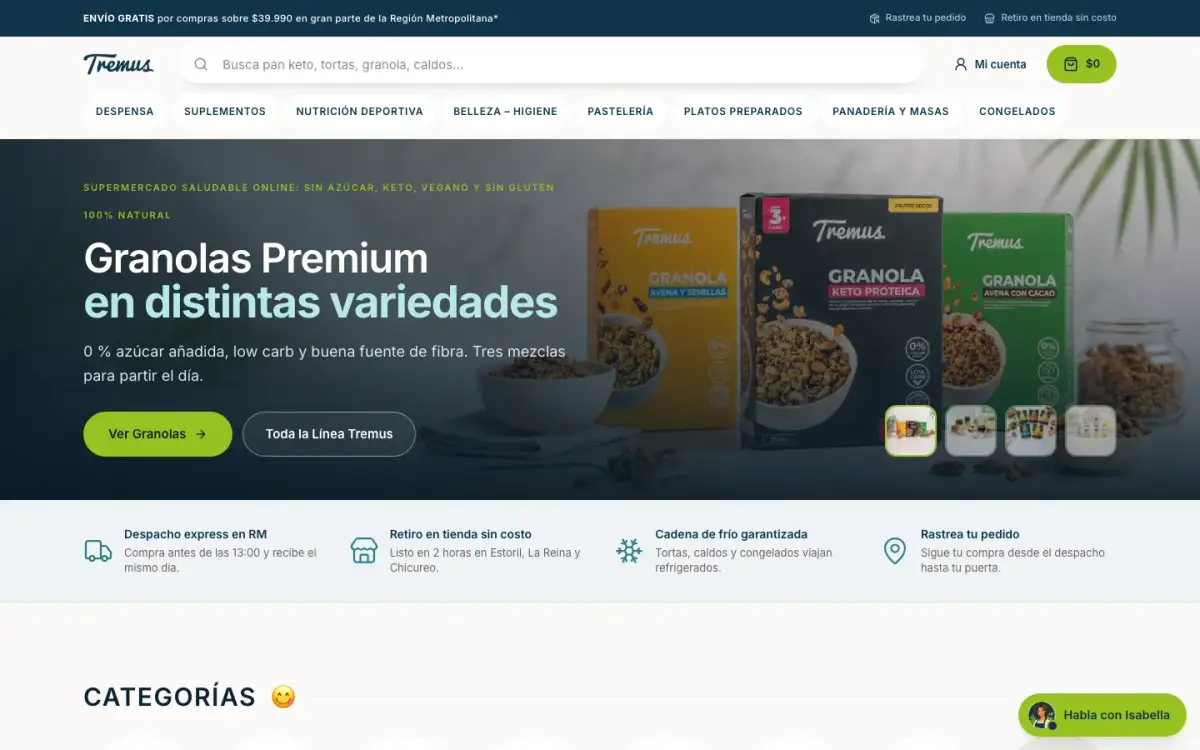
An online store, an iPhone app and an assistant that answers in real time by voice using the brand’s knowledge.
View project
An example of source-backed answers, knowledge retrieval and continuity of support.
Explore the workWe test a task from your operation, document its behaviour and agree what is needed to put it into production.
The pilot is quoted by scope once the task and sources are defined. Build, hosting and model usage are presented as three separate lines so you can compare them.
Recurring third-party costs: Model usage per conversation, hosting and infrastructure, and channel licences (the WhatsApp API, for example).
Models can generate incorrect answers. We bound their actions, measure behavior with an evaluation set and hand off to a person when support is insufficient. We agree on indicators and a baseline with you to evaluate quality.
It depends on conversation volume and the model chosen. We estimate it before the pilot using your real volume and present it separately from development: build, hosting and usage are three distinct lines.
It helps a great deal, but it need not be perfect. Part of the pilot is finding out what is missing. What is essential is that it exists and that someone owns keeping it current: an agent over stale documentation repeats errors very confidently.
Yes, when the scope and access allow it. We define which mailbox it can read, which fields it extracts and where it records them. We validate fields, control duplicates and send exceptions or actions requiring approval for review.
Give customers useful answers grounded in your business information. We build assistants with source retrieval, connected tools and a clear handoff to your team.
An order, enquiry or stock change should not require updating several tools by hand. We connect your applications so data reaches the right place and you can see what happened.
If your operation relies on spreadsheets, emails and repeated tasks, we turn that process into a tool of your own. We build the data, screens and connections your team needs to work.
Tell us what comes in, what needs to happen next and which tools you use. We define a first agent, its connections and how to evaluate its work.